
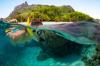
Snorkeler's Guide to Fiji: 10 Best Spots for Snorkeling
What Are the Most Popular Places for Underwater Exploring in Fiji?
The best snorkeling in Fiji is spread across the islands, from sheltered lagoons to vast barrier reefs that reveal the country’s legendary marine diversity. You’ll find many great sites near Viti Levu with vibrant coral ecosystems and an impressive variety of underwater life. Reaching these spots can mean a short boat ride or a quick swim from beaches with easy access for beginners.
If you’re a dedicated snorkeler, the main island’s easily accessible sites are only the start. You could venture into the Yasawas, Mamanucas, or outlying islands for crystal-clear visibility, thriving reefs, and encounters with larger marine species. Explore Fiji’s islands to discover some of the best spots for snorkeling in the South Pacific.
1. Rainbow Reef (Taveuni Island)
Spectacular soft coral

Good for: Adventure, Photo
Rainbow Reef is a colorful reef that stretches between Taveuni Island and Vanua Levu. You’ll quickly understand why it’s known as Fiji’s “soft coral capital.” As you snorkel above the glowing walls, you’ll see brilliant pinks, yellows, oranges, blues, and purples swaying in the currents of the Somosomo Strait. The water clarity often makes the coral seem close enough to touch. Anemone, butterflyfish, and fusiliers gather over the ridges, and you might even catch sight of a leopard shark.
Conditions vary with the tide, and an expert guide can lead you to the sections that offer the calmest surface. Bring an underwater camera to capture souvenirs of one of Fiji’s most photogenic reefs.

Rainbow Reef (Taveuni Island)
2. Great Astrolabe Reef (Kadavu Island)
One of the world’s largest barrier reefs
Good for: Adventure, Couples
Great Astrolabe Reef, named after a French ship that nearly ran aground in the area in 1827, is a huge barrier reef that wraps around Kadavu Island’s southern coastline. When you snorkel here, you glide above sprawling coral gardens that feel completely untouched.
Water conditions are typically clear, so you should get a fabulous view of vibrant corals and underwater landscapes. There’s also a chance of spotting turtles, rays, and other marine life swimming gently past you. Consider booking a trip that combines a boat ride with guided snorkeling to reach the best spots along the reef’s protected passages.
Great Astrolabe Reef (Kadavu Island)
3. Manta Ray Passage (Yasawa Islands)
Sightings of majestic manta rays
Good for: Adventure, Families, Couples
Manta Ray Passage in the Yasawa Islands is a deep, fast-moving channel where plankton-rich currents draw, as you may have guessed, manta rays, mostly between May and October. Snorkeling here gives you front-row views of these graceful giants as they barrel-roll through the water to feed. Float above vibrant coral formations while guides help position you safely; maintaining distance is key to protecting the mantas.
The passage lies between Nanuya Balavu and Drawaqa Island, and most resorts in the area run short boat transfers when sightings are likely. Check with your accommodation about tides and timings, then watch these gentle creatures glide beneath you.
Manta Ray Passage (Yasawa Islands)
4. Namena Marine Reserve (Vanua Levu)
A sanctuary for diverse marine species
Good for: Adventure, Photo
South of Vanua Levu, Namena Marine Reserve is one of Fiji’s most carefully protected ecosystems, and snorkeling here gives you a glimpse of biodiversity rarely seen elsewhere. You could encounter dense schools of barracuda or spot seahorses, shrimps, and nudibranchs, as well as admiring the brilliant soft corals that glow along the reserve’s walls.
The reef’s health is exceptional thanks to long-standing conservation efforts, and many species, including turtles, enjoy the calm, quiet environment. Boat trips access many sheltered spots suitable for snorkelers. Entrance fees support local conservation, so your visit will also help preserve the area. Join a marine guide to discover why Namena is considered a jewel of Fijian waters.
Namena Marine Reserve (Vanua Levu)
5. Blue Lagoon (Nanuya Lailai Island)
Tranquil and sheltered beauty spot
Good for: Adventure, Families
Renowned for its glassy, turquoise water and calm conditions, the Blue Lagoon on Nanuya Lailai Island is a beautiful area that makes underwater discovery easy for all abilities. You’ll drift over shallow coral heads where parrotfish, sergeant majors, and wrasses swim close to the surface. The reef’s colors may not be the brightest in Fiji, but there’s still plenty to admire in this tranquil snorkeling spot.
Once you’ve explored the lagoon, wander along the beach and take in views of the surrounding islands. Stay until late to take in a truly spectacular sunset.
Blue Lagoon (Nanuya Lailai Island)
6. Beqa Lagoon (Beqa Island)
A divers’ paradise and protected shark reserve
Good for: Adventure, Photo
Beqa Lagoon is a large lagoon that’s part of a vast barrier reef system between Viti Levu and Beqa Island. The area is a protected sanctuary for several shark species, including bull, tiger, and nurse sharks. When you snorkel in the lagoon’s clear, calm waters, you’ll discover sweeping forests of vibrant hard and soft corals that form remarkable underwater landscapes. Colorful clownfish, parrotfish, starfish, moray eels, and eagle rays glide gracefully through the coral maze.
You can reach the area by boat from many of the resorts along the Coral Coast or stay on the island of Beqa for easy access. Join a guided trip to explore the lagoon’s thriving marine world.
Beqa Lagoon (Beqa Island)
7. Malolo Barrier Reef (Mamanuca Islands)
Wildlife-rich lagoons in the Mamanucas
Good for: Adventure, Couples
Malolo Barrier Reef borders several of the Mamanuca Islands and offers excellent snorkeling in crystalline waters. Sites like the well-known Supermarket attract schools of trevally, reef sharks, rays, and countless tropical fish, thanks to steady currents that bring in nutrients. You’ll also find plenty of colorful coral heads and sheltered pools that are great for less experienced snorkelers.
Shore-based snorkeling is available from many of the beaches in the area. For boat-based snorkeling, trips from Malolo, Musket Cove, and nearby resorts visit a variety of reef sections, depending on conditions. Mornings often provide the calmest water and best light for spotting marine life. Pack your mask and explore the dynamic ecosystems of this beautiful reef.
Malolo Barrier Reef (Mamanuca Islands)
8. Natadola Bay (Viti Levu)
Family-friendly beachfront reef
Good for: Adventure, Families
Natadola Bay, on Viti Levu’s Coral Coast, is one of the best mainland spots for snorkeling without needing a boat. You can step straight from the sandy beach into clear water filled with coral outcrops, beautiful butterflyfish, and darting damselfish. This family-friendly spot suits beginners while still offering plenty to see for more advanced underwater explorers.
Conditions are gentlest at mid to high tide, when the bay feels like a natural swimming pool. Rent gear from nearby resorts or bring your own, then head out for a rewarding snorkel right off the beach.
Natadola Bay (Viti Levu)
9. Vatu-i-Ra Passage (Suncoast)
Current-fed passage teeming with life
Good for: Adventure, Photo
Within Fiji’s Bligh Waters, the Vatu-i-Ra Passage area is a colorful diving site that’s named for the nearby small island and bird sanctuary. Narrow passages between the reefs pulse with life as nutrient-rich currents build, supporting some of the country’s most diverse coral communities.
Snorkeling through the seascape presents you with views of soft corals and swirling schools of fusiliers and anthias, as well as occasional turtles cruising along the channel edges. Conditions can be strong, so join a knowledgeable guide to experience a spot that’s celebrated for its richness and wild ocean energy.
Vatu-i-Ra Passage (Suncoast)
10. Nacula Island
Calm waters and accessible reefs
Good for: Adventure, Photo
Nacula Island, in the northern Yasawa group, is surrounded by clear blue, tranquil water that’s great for snorkelers of all experience levels. You can swim out from many beaches to reach healthy house reefs filled with branching corals, neon wrasses, and curious anemonefish.
The island’s sheltered bays mean conditions are often gentle, and visibility remains good throughout the day. With minimal boat traffic and a peaceful setting, the underwater world feels close and easy to explore. Slip into the water and explore the Yasawas’ amazing reef life.
Nacula Island
This article includes opinions of the Go Guides editorial team. Hotels.com compensates authors for their writing appearing on this site; such compensation may include travel and other costs.