
![The Arctic Circle is one of the five major circles of latitude that mark maps of the Earth. As of 16 February 2015, it runs 66°33′45.6″ north of the Equator.
The region north of this circle is known as the Arctic, and the zone just to the south is called the Northern Temperate Zone. The equivalent polar circle in the Southern Hemisphere is called the Antarctic Circle.
The Arctic Circle is the southernmost latitude in the Northern Hemisphere at which the sun can remain continuously above or below the horizon for 24 hours (at the June solstice and December solstice respectively). North of the Arctic Circle, the sun is above the horizon for 24 continuous hours at least once per year (and therefore visible at midnight) and below the horizon for 24 continuous hours at least once per year (and therefore not visible at noon). On the Arctic Circle those events occur, in principle, exactly once per year, at the June and December solstices, respectively. However, in practice, because of atmospheric refraction and mirages, and because the sun appears as a disk and not a point, part of the midnight sun may be seen on the night of the northern summer solstice up to about 50′ (90 km (56 mi)) south of the Arctic Circle; similarly, on the day of the northern winter solstice, part of the sun may be seen up to about 50′ north of the Arctic Circle. That is true at sea level; those limits increase with elevation above sea level, although in mountainous regions there is often no direct view of the true horizon.
The position of the Arctic Circle is not fixed. It directly depends on the Earth's axial tilt, which fluctuates within a margin of 2° over a 40,000-year period,[2] notably due to tidal forces resulting from the orbit of the Moon. The Arctic Circle is currently drifting northwards at a speed of about 15 m (49 ft) per year; see Circle of latitude for more information.
#snow](https://images.trvl-media.com/place/6140564/a9f9449e-bab4-40a6-a9a1-5356b0cc2aa8.jpg?impolicy=resizecrop&rw=1920&ra=fit&ch=480)
Photo by Sharrie Shaw
Hotels in Nikiski

Free cancellation options if plans change

Earn rewards on every night you stay

Save more with Member Prices
Check prices for these dates
Where to stay in Nikiski?

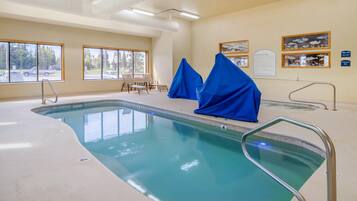


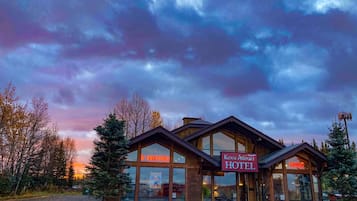
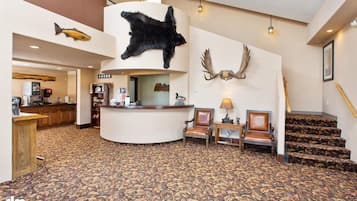
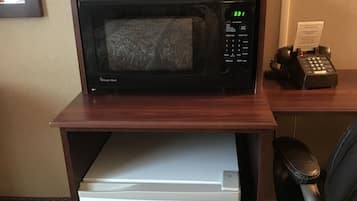
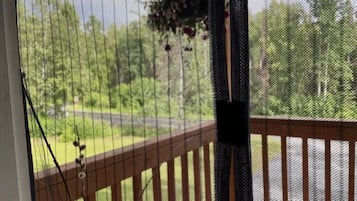
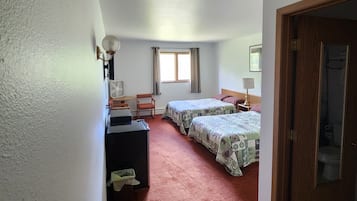
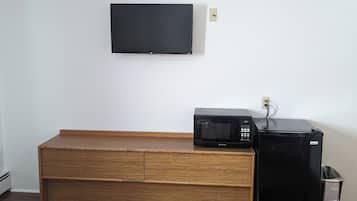
Quality Inn Kenai
Quality Inn Kenai
8.4 out of 10, Very Good, (566)
The price is $98
$104 total
includes taxes & fees
Dec 10 - Dec 11













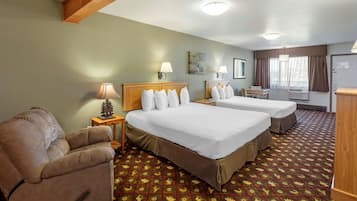


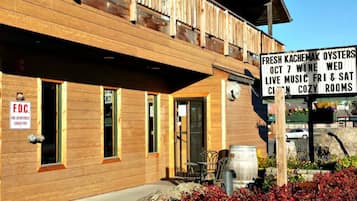



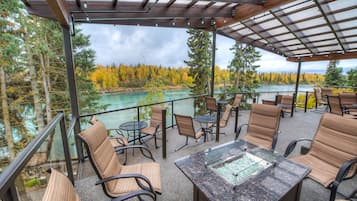
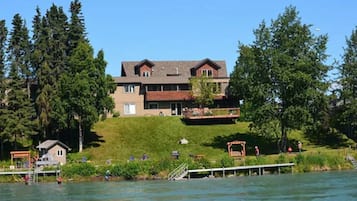
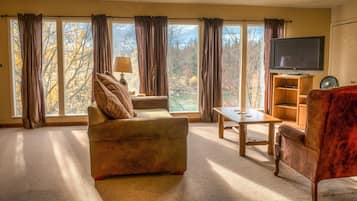














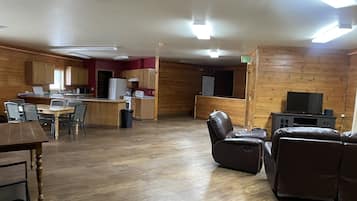
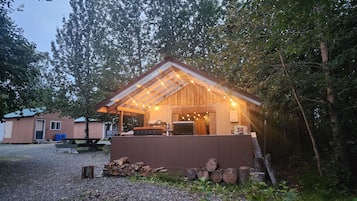
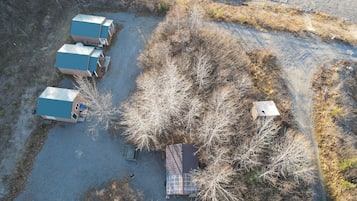






Lowest nightly price found within the past 24 hours based on a 1 night stay for 2 adults. Prices and availability subject to change. Additional terms may apply.
Go beyond your typical stay in Nikiski
Pet friendly
Apartment
Top landmarks in Nikiski
Learn more about Nikiski
Nikiski is well-known for its attractions such as Island Lake and Kenai National Wildlife Refuge. The city has something for everyone including sights like Cabin Lake and Kotsina Road within a secluded setting.
![The Arctic Circle is one of the five major circles of latitude that mark maps of the Earth. As of 16 February 2015, it runs 66°33′45.6″ north of the Equator.
The region north of this circle is known as the Arctic, and the zone just to the south is called the Northern Temperate Zone. The equivalent polar circle in the Southern Hemisphere is called the Antarctic Circle.
The Arctic Circle is the southernmost latitude in the Northern Hemisphere at which the sun can remain continuously above or below the horizon for 24 hours (at the June solstice and December solstice respectively). North of the Arctic Circle, the sun is above the horizon for 24 continuous hours at least once per year (and therefore visible at midnight) and below the horizon for 24 continuous hours at least once per year (and therefore not visible at noon). On the Arctic Circle those events occur, in principle, exactly once per year, at the June and December solstices, respectively. However, in practice, because of atmospheric refraction and mirages, and because the sun appears as a disk and not a point, part of the midnight sun may be seen on the night of the northern summer solstice up to about 50′ (90 km (56 mi)) south of the Arctic Circle; similarly, on the day of the northern winter solstice, part of the sun may be seen up to about 50′ north of the Arctic Circle. That is true at sea level; those limits increase with elevation above sea level, although in mountainous regions there is often no direct view of the true horizon.
The position of the Arctic Circle is not fixed. It directly depends on the Earth's axial tilt, which fluctuates within a margin of 2° over a 40,000-year period,[2] notably due to tidal forces resulting from the orbit of the Moon. The Arctic Circle is currently drifting northwards at a speed of about 15 m (49 ft) per year; see Circle of latitude for more information.
#snow](https://images.trvl-media.com/place/6140564/a9f9449e-bab4-40a6-a9a1-5356b0cc2aa8.jpg?impolicy=fcrop&w=900&h=675&p=1&q=high)
Photo by Sharrie Shaw
Open Photo by Sharrie Shaw
Check out reviews of Nikiski hotels guests love

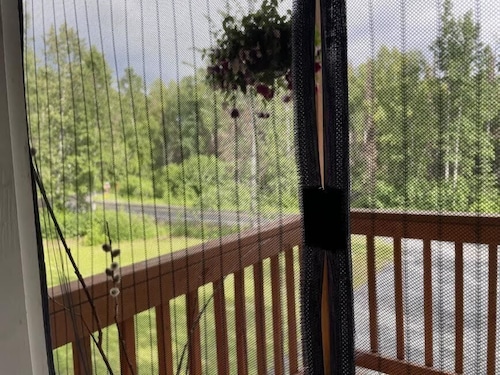
Alaska Angler's Inn
10/10 Excellent


Frequently asked questions
Keep exploring
- Landmarks
- Hotels close to nearby airports
- Nearby cities
- Top cities in United States of America
- Most popular destinations
- More ways to book
- New York Hotels
- Las Vegas Hotels
- Orlando Hotels
- Chicago Hotels
- Miami Hotels
- Los Angeles Hotels
- San Diego Hotels
- San Francisco Hotels
- Houston Hotels
- Pigeon Forge Hotels
- Gatlinburg Hotels
- Fort Lauderdale Hotels
- Atlanta Hotels
- San Antonio Hotels
- New Orleans Hotels
- Austin Hotels
- Key West Hotels
- Nashville Hotels
- Honolulu Hotels
- Boston Hotels
Most popular destinations
Hotels
- Encanto Acapulco
- Hotels in New Orleans
- Marival Distinct All-Suites & World Spa – Handwritten Collection
- Fiesta Inn Colima
- Hotel Mision Catavina
- Holiday Inn Cuernavaca by IHG
- Hotel Riu Palace Aruba - All Inclusive
- Marquis Reforma Hotel Spa
- Hotels in Toronto
- iStay Hotel Monterrey Histórico
- Hotels with Free Breakfast in West Memphis
- Hotel Suites Arges - Centro Chetumal
- Hotels in Sosúa
- Holiday Inn Express & Suites St Louis Airport by IHG
- Hotels in Isla Mujeres
- Hotels in Yosemite National Park
- Rivi Grand Hotel
- Holiday Inn Express Hotel & Suites Cuernavaca by IHG
- Guadalajara Plaza Expo Business Class
- City Express by Marriott Playa Del Carmen
- Quinta Nicolás Valle de Guadalupe
- Premier Inn Dubai Barsha Heights
- Hotels in Zona Hotelera
- Embassy Suites by Hilton McAllen Convention Center
- Hotel Jard Inn Adults only
- Hotels near Miami Beach Convention Center